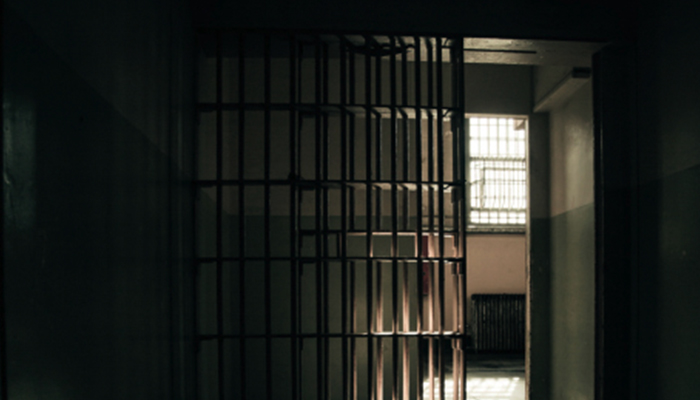
The man had a red bandanna in his right hand. The hand seized it with the first jolt. The bandanna shot out of his fist after the second. On the third, the hand opened lifelessly.
There are a few issues in this country on which the discussion never stops. The death penalty, one of the grayest aspects of our judicial system, is among the most challenging to discuss. On one hand, you seek retribution for the families of the victims and on the other, you remember its finality. The battle between justice and revenge is complex, equivocal and insoluble.
Before I delve into this topic, know that I am not advocating anything. This isn’t meant to be an opinionated piece. Actually, I have no opinion. This is a discussion, an exploration into the psychology of capital punishment. The more I research, the more conflicted I am. Being so far removed from this system allows me to look at the facts objectively, yet it deprives me of the passion experienced during the process. I am more than sympathetic toward the families of victims, whose suffering is immeasurable and indefinite. With that, I can’t help but think of the families of the convicted, whose pain should not be ignored.
“I’d like to say to the families of all my victims, I’m sorry for all the grief and heartache I brought to them. If my death brings them any satisfaction, so be it.” Last words of David Washington 1984
The only firm belief I do have is that the system we have in place in the U.S. right now is inequitable. It’s too arbitrary to be fair. About 2 percent of known murders are sentenced to death and whether the punishment is death or not is based on geography, race, representation, or gender. Former Illinois Gov. George Ryan in his speech granting clemency to all inmates in 2003 said that you are five times more likely to get a death sentence for first degree murder in rural Illinois than you are in Cook County. Even if you’re the most defiant supporter, you know that’s unjust.
“I have nothing to say except that I am innocent. It’s easier to convict a Negro than a white person. So long everybody.” Last words of Robert E. Folkes 1945
The victims, the convicted, the lawyers, the jurors, the judges, the wardens and finally, the executioner. In Ivan Solotaroff’s The Last Face You’ll Ever See, Solotaroff delves into the eyes of executioners. We often consider how a death sentence affects the families of the victims and the convicted, but what about the masked man pushing the button? In Solotaroff’s interviews, some were driven to alcoholism, and there were others whose lives revolved around this task. The most interesting is that all were volunteers to the job. $150 and lifelong psychological ramifications were acceptable for most. I must say, it takes a certain degree of courage to do what executioners do. Is courage the right word?
“To call what he had done twelve hours earlier “a job” was absurd. That had nothing to do with employment. To say it was “the law” either evaded the truth or missed the point altogether. What he had done was the right thing to do. And it wasn’t some abstract will of the people that he’d carried out.”Solotaroff on Mississippi executioner Donald Hocutt’s thoughts after the execution of Jimmy Lee Gray.
The finality of the death sentence has the most impact on me. Inmates on death row walk around perfecting their last words, contemplating their favorite dish for their last meal, predicting their last moments with their families, most of whom are ashamed of them as is, and anticipating their last breath. Last Words of the Executed by Robert K. Elder is a compilation of last words from the 1800s to the present. The book, while eerie and at times disturbing, was fascinating. How do you even begin to come up with the last thing you’ll ever say?
“I don’t want to die with a lie on my lips. I lied when I said this killing was a result of gin and anger. I deliberately planned a robbery. I was watching for anybody worth robbing. I had a revolver and an automobile. I know how to handle revolvers, but this was the first time I had ever handled an automatic. As I pressed it against the man and told him to put his hands up, the gun went off, although, so help me God, I didn’t mean to shoot” Last words of Augst Vogel 1930
In the Last Face You’ll Ever See, prosecutor Jim Williams says, “We need the death penalty to show that life is precious.” Is that true? According to the Death Penalty Information Center, murders in states that practice the death penalty have been consistently higher than in states that don’t for the last two decades. If there is no reliable evidence that the death penalty deters future murders, what’s its purpose? Perhaps an unclear motive is the cause of this broken system.
“…Oh I would like to say in closing, “What about those Cowboys?” Last words of William Prince Davis 1999
Sources
I strongly encourage anyone interested in this topic to read former Gov. Ryan’s speech. It takes you through the faults in the system and how he came about to his decision to set all Illinois inmates free.
Solotaroff, Ivan. The Last Face You’ll Ever See: The Private Life of the American Death Penalty
*The image with the bandanna is a memory recounted by Warden Burl Cain to Solotaroff at Angola State Prison in Louisiana.
Elder, Robert K. Last Words of the Executed.
Death Penalty Information Center
http://query.nytimes.com/gst/fullpage.html?res=9C0DE5D6113AF934A35753C1A9679C8B63&pagewanted=all
http://voices.washingtonpost.com/crime-scene/josh-white/detailed-account-of-powells-vi.html
One response to “Punishing the Penalty”
Regardless if you have an opinion, this article definitely solidifies mine. It was interesting having a look at both perspectives and reminding us that it’s not as clear-cut an issue as I sometimes think.